Ratgeber: Wissen

Anleitungen, Kaufberatung und Hintergründe zum Kaffeerösten. 27 Artikel.
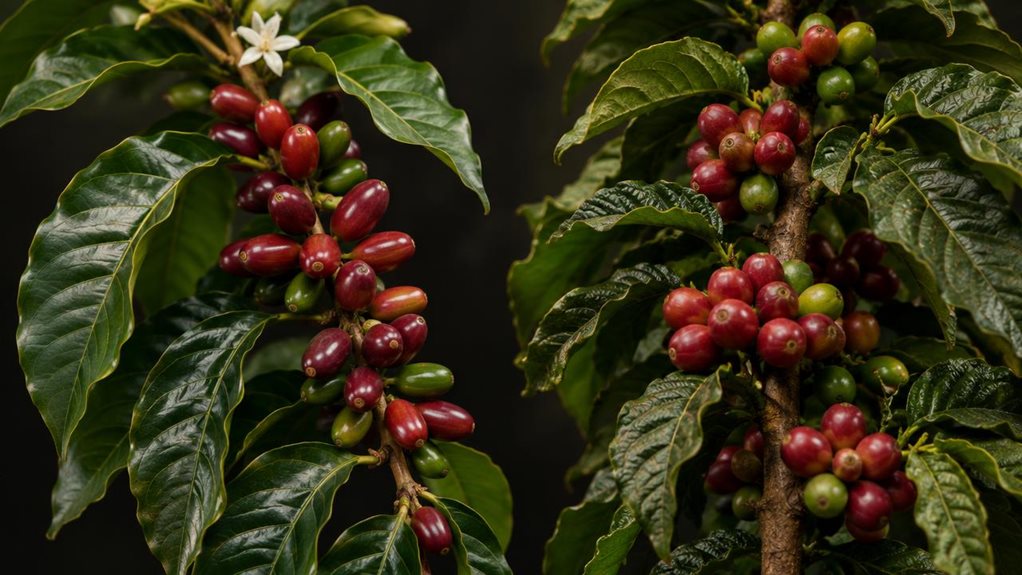
A high-resolution studio photograph of two contrasting coffee branches side by side: one with elegant, elongated Arabica cherries and leaves, softly lit, rich green and burgundy tones; the other with rounder Robusta cherries, denser foliage, and a sturdier, rougher appearance. Shot with crisp macro detail, shallow depth of field, natural texture, and warm cinematic lighting on a dark neutral background. No text, no labels, no words.

Arabica vs. Robusta: Die wichtigsten Unterschiede einfach erklärt

Arabica und Robusta sind die zwei Hauptarten von Kaffeebohnen, und man kann sie leicht auseinanderhalten.

Weiterlesen
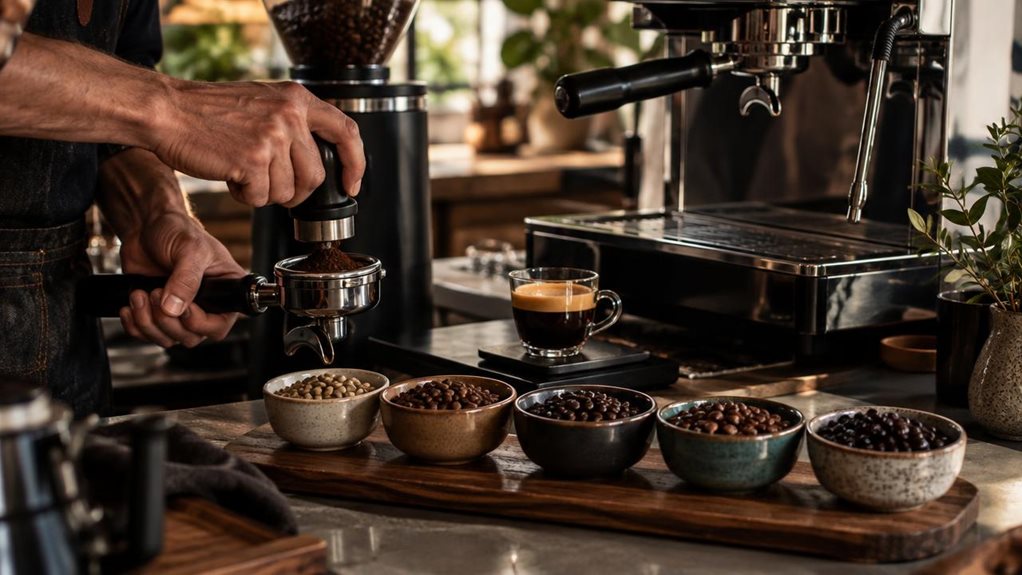
A high-end, editorial-style coffee photograph in a warm café setting: a sleek espresso machine beside a neatly arranged lineup of single-origin coffee beans in small ceramic bowls, each with distinct tones and textures. A barista’s hands grind fresh beans into a portafilter, with rich crema forming in a glass demitasse. Soft natural light, shallow depth of field, crisp detail, moody shadows, premium lifestyle aesthetic, no text or words.

Warum Single-Origin-Bohnen für Espresso wählen?

Single-Origin-Bohnen lassen dich einen Ort schmecken, nicht eine Mischung. Sie können fruchtige äthiopische Noten, schokoladige kolumbianische Aromen oder erdige sumatranische Tiefe mit klarem Terroir und saisonalem Charakter bringen.

Weiterlesen
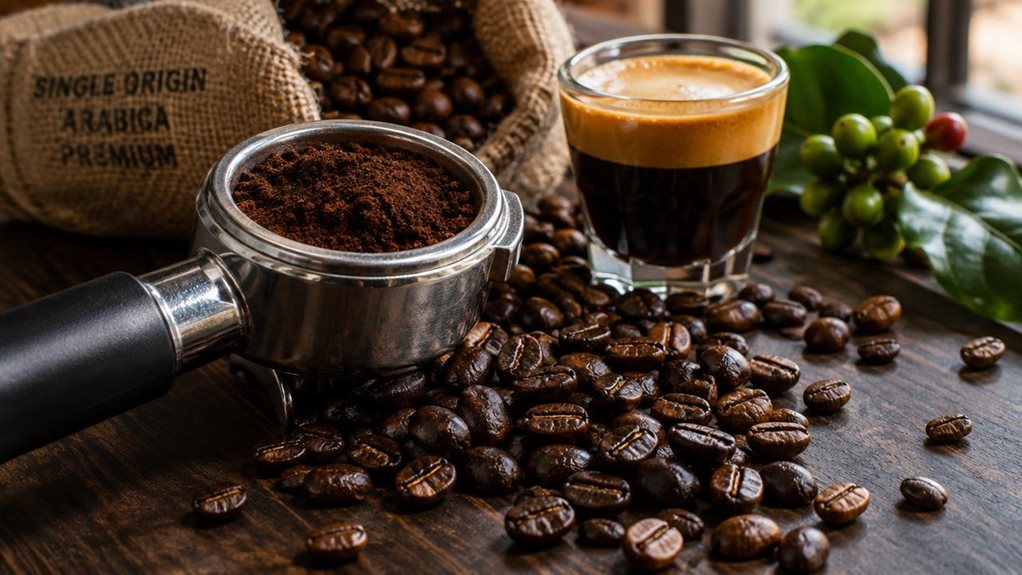
A high-end close-up photograph of premium single origin espresso beans scattered beside a sleek portafilter on a dark wooden surface, with rich oil sheen, deep brown tones, and subtle crema-colored highlights. In the background, a small glass cup of espresso with a thick golden crema sits near a burlap sack and a few green coffee cherries, softly lit by natural window light, creating a refined, artisanal coffee scene with sharp detail and shallow depth of field.

Was macht einen großartigen Single-Origin-Espresso-Bohnen aus?

Ein großartiger Single-Origin-Espresso-Bean liefert klaren Herkunftsgeschmack, ausgewogene Süße und genug Struktur für einen 20–30-Sekunden-Shot, ohne flach oder schlammig zu schmecken.

Weiterlesen
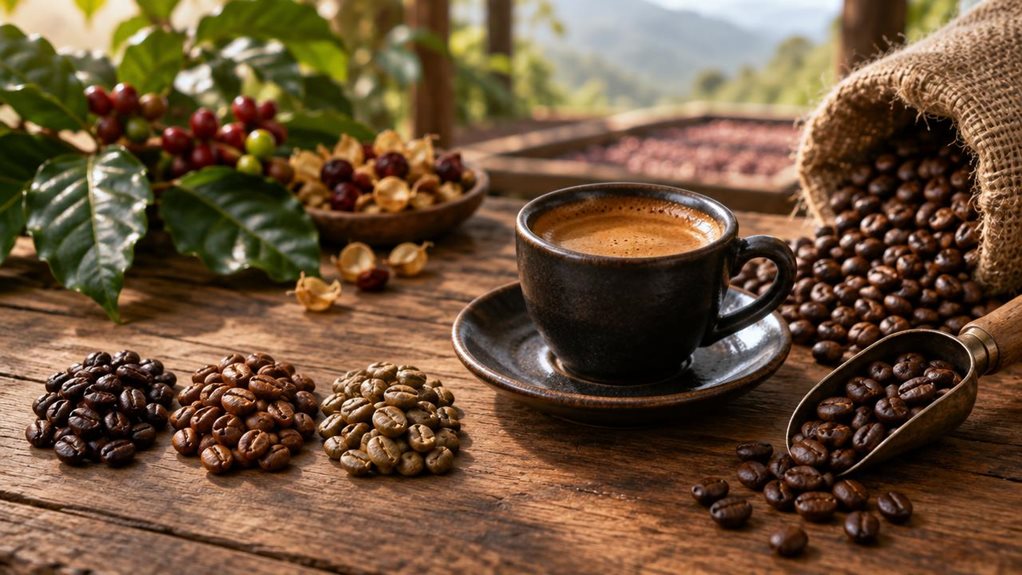
A high-end, editorial-style coffee photograph on a rustic wooden table: three distinct single origin espresso beans arranged beside a sleek espresso cup, a small scoop, and a burlap sack spilling beans. Warm natural window light highlights rich textures, glossy bean surfaces, and crema. Soft background blur with faint coffee farm elements like leaves and dried parchment cherries, creating a refined, artisanal mood. No text, labels, or words.

3 Tipps zur Auswahl von Single-Origin-Espressobohnen

Prüf zuerst das Röstdatum: Am besten nimmst du Bohnen, die 7–21 Tage nach der Röstung sind, denn Single-Origin-Espresso schmeckt dann oft am besten.

Weiterlesen
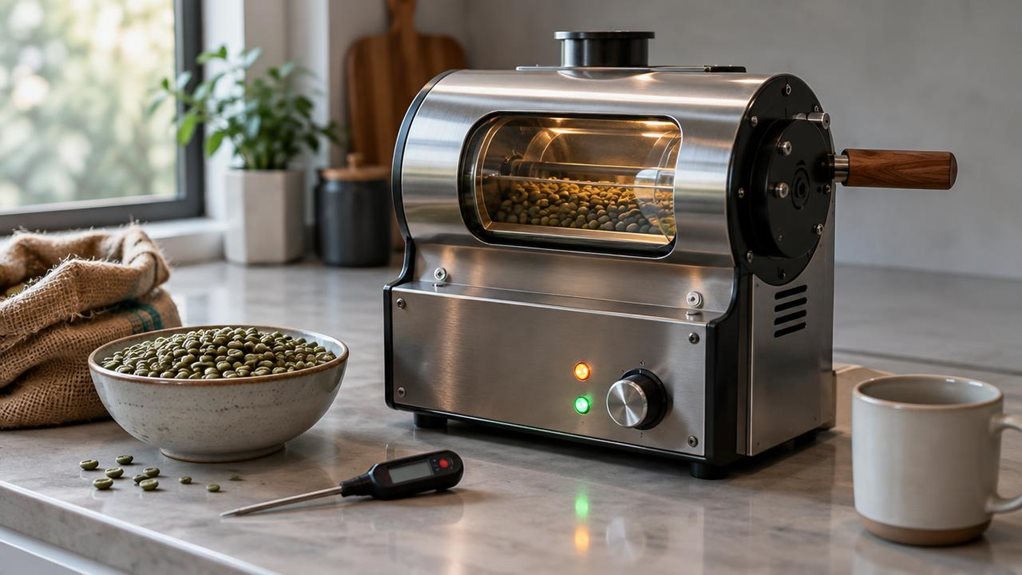
A high-end DSLR-style photograph of a sleek beginner coffee roasting machine on a clean kitchen counter, brushed steel корпус with a glass viewing window, glowing indicator lights, and a small roast drum visible inside. Around it sit green coffee beans in a ceramic bowl, a digital thermometer, burlap sack, and a minimalist mug. Soft natural window light, shallow depth of field, crisp reflections, realistic textures, no text, no words.

Was ist die beste Kaffeeröstmaschine für Anfänger?

Wenn du gerade mit dem Rösten von Kaffee anfängst, ist der Fresh Roast SR540 eine super Wahl. Er ist leicht zu lernen, du kannst Hitze, Lüfter und Zeit einstellen, und er schafft etwa 114 g pro Charge.

Weiterlesen
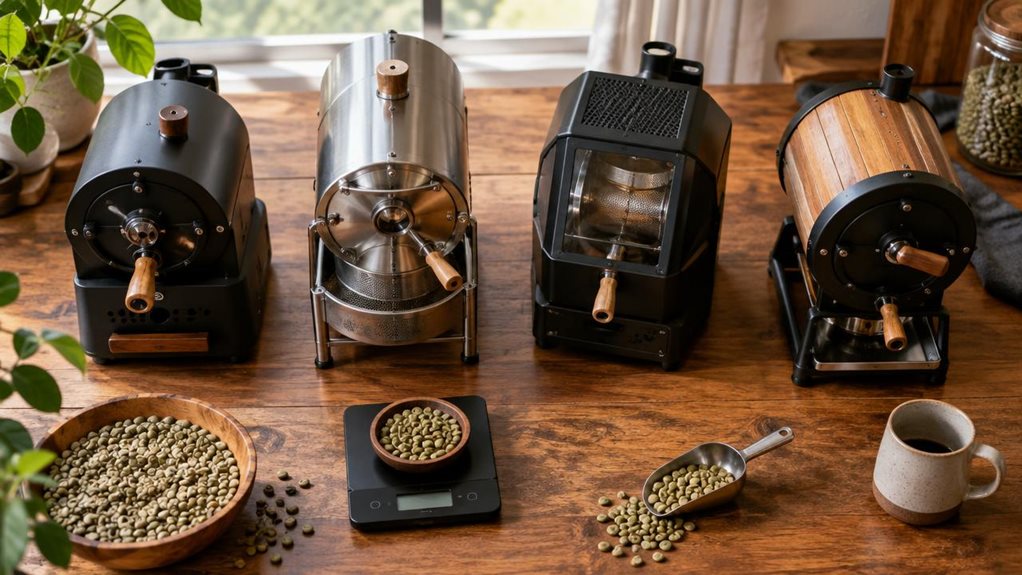
A high-end DSLR-style overhead photograph of a cozy kitchen countertop displaying four beginner-friendly home coffee roasters side by side, each with distinct materials and shapes, surrounded by green coffee beans, a small scale, a scoop, and a ceramic mug. Warm natural window light, crisp reflections, shallow depth of field, rich wood and matte metal textures, clean composition, realistic color balance, no text, no labels, no words.

Die besten Heim-Kaffeeröster für Anfänger im Vergleich

Wenn du deinen ersten Heimkaffeeröster auswählst, fang mit einem Air Roaster wie dem Fresh Roast SR540 an. Er ist einfach zu benutzen, röstet etwa 114 g pro Durchgang und liefert schnell süße, karamellig-schokoladige Tassen.

Weiterlesen
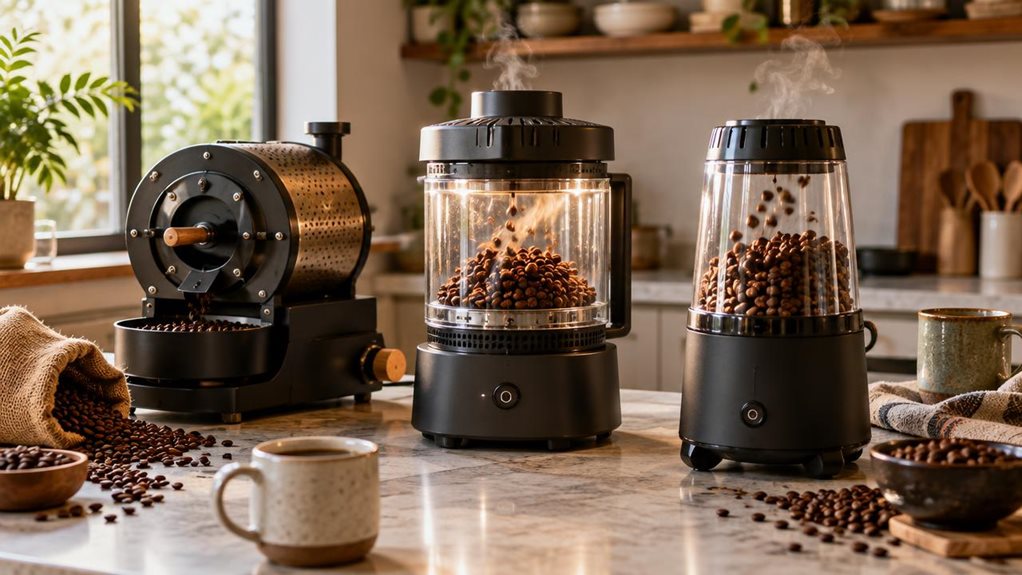
A high-end lifestyle photograph of three beginner-friendly home coffee roasters arranged on a clean kitchen counter: a compact drum roaster, a sleek glass-air roaster, and a small electric popcorn-style roaster. Warm natural window light, rich matte metals, roasted beans scattered nearby, burlap sack, ceramic mugs, and subtle steam. Crisp focus, shallow depth of field, premium product photography, no text, no labels, no words.

Top 3 anfängerfreundliche Heimkaffeemaschinen-Röster

Für Anfänger sind drei gute Heimkaffeeröster der Fresh Roast SR540, der Fresh Roast SR800 und ein günstiger Popcornröster.

Weiterlesen
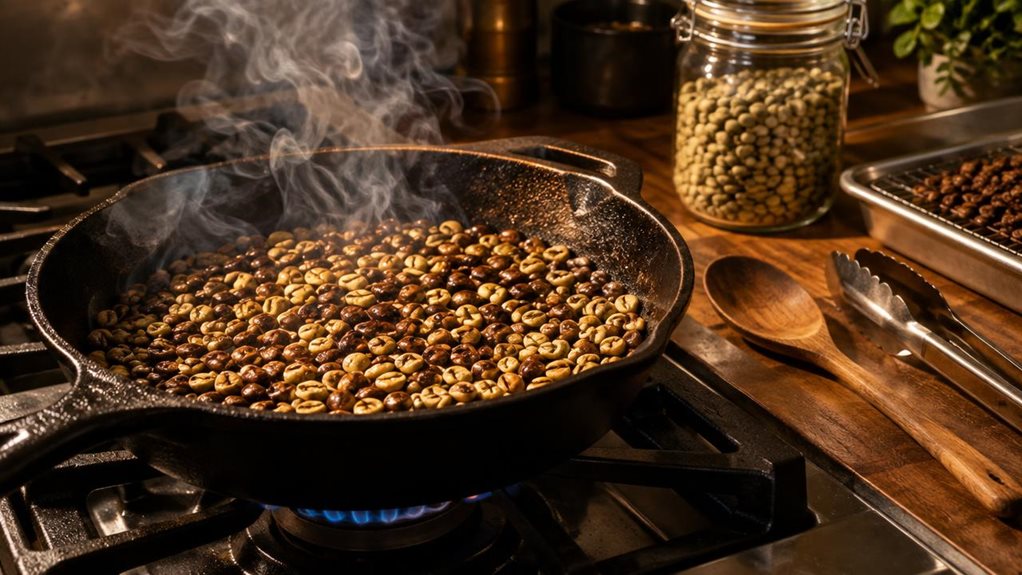
A high-end documentary-style kitchen photograph of a cast-iron skillet on a gas stovetop, filled with glossy green coffee beans mid-roast, wisps of aromatic smoke curling upward, warm amber light reflecting off the beans’ evolving color. A wooden spoon rests nearby, alongside a glass jar of fresh beans, metal tongs, and a cooling tray. Crisp textures, shallow depth of field, rich shadows, no text or labels.

10 beste Tipps und Techniken zum Kaffeerösten auf dem Herd

Du kannst auf deinem Herd guten Kaffee rösten: Fang mit 100–200 g grünen Bohnen an, heiz deine Pfanne auf 375–450 °F vor und rühr oft um, damit die Bohnen nicht anbrennen.

Weiterlesen
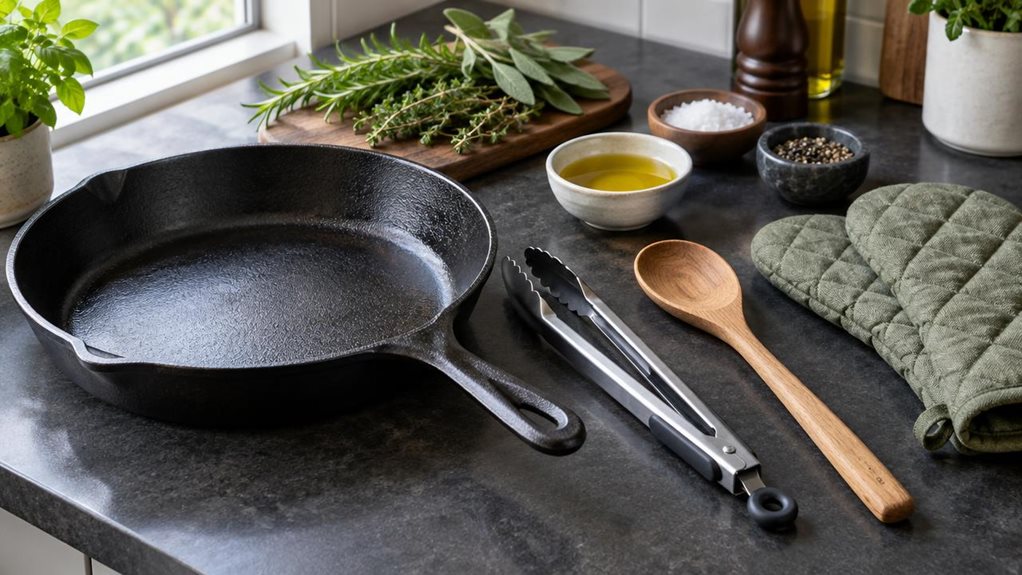
A high-end, sharply focused kitchen still life showing stovetop roasting tools neatly arranged on a dark countertop: a heavy cast-iron skillet, long metal tongs, a wooden spoon, oven mitts, a small bowl of oil, salt, pepper, and fresh herbs. Soft natural window light highlights textures of metal, wood, and cast iron. Clean, realistic composition, no people, no text, no labels, no words.

Welche Werkzeuge brauchst du, um auf dem Herd zu rösten?

Du brauchst einen schweren gusseisernen Bräter mit 6–7 Quart oder einen stabilen Topf, lange Zangen, einen Holzlöffel, einen gut schließenden Deckel und ein Instant-Read-Fleischthermometer, um einen Chuck Roast richtig auf dem Herd zu schmoren. Messbecher, ein Schneebesen und Ofenhandschuhe...

Weiterlesen
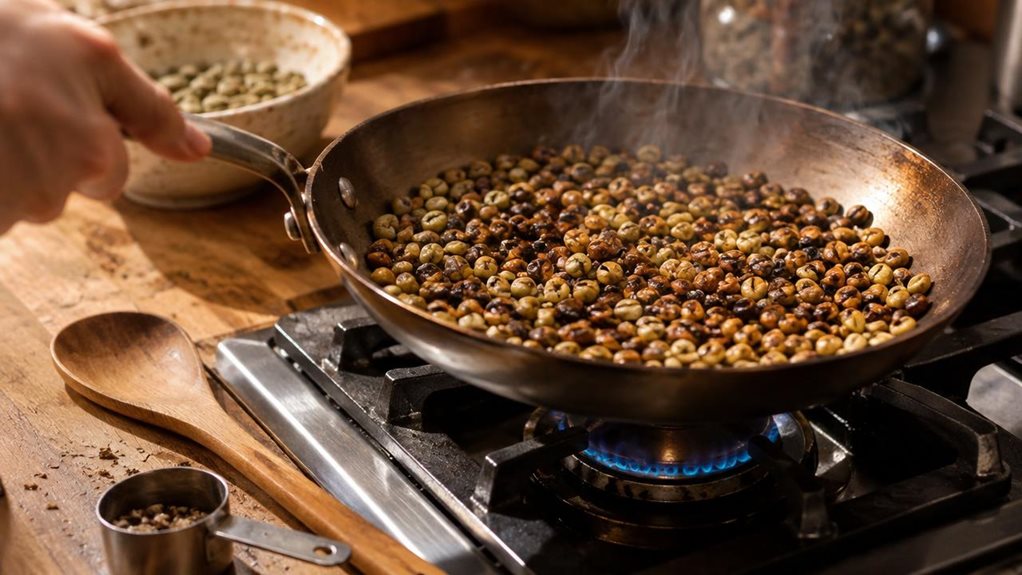
A high-end DSLR photograph of stovetop coffee roasting in progress: a hand-turned metal skillet on a gas burner, glossy green coffee beans gradually deepening to golden brown. Wisps of steam and faint chaff rise in warm kitchen light. Nearby lie a wooden spoon, measuring scoop, and ceramic bowl. Rich textures, shallow depth of field, crisp highlights, natural color, no text, no words, realistic documentary style.

Stovetop-Kaffee rösten: Eine Schritt-für-Schritt-Anleitung

Du kannst guten Kaffee auf deinem Herd mit einer schweren Pfanne, grünen Bohnen, einem Löffel und einem Ventilator rösten.

Weiterlesen
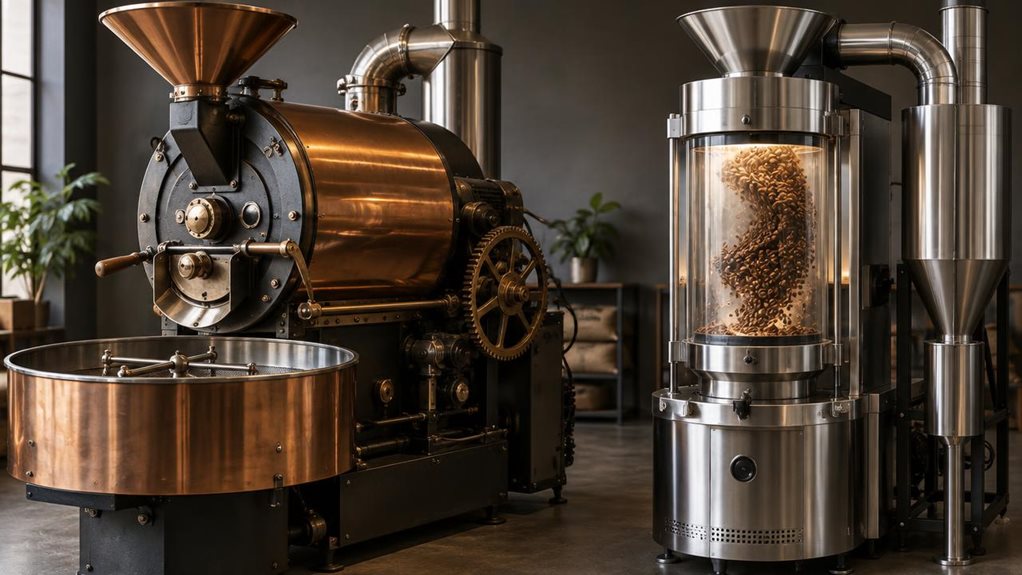
A high-end documentary-style photograph of two coffee roasting machines side by side: a polished drum roaster with a large cylindrical metal drum, exposed gears, and warm copper tones, contrasted with a sleek air roaster featuring a vertical glass chamber, visible swirling beans, and clean stainless-steel lines. Soft studio lighting highlights the machinery’s textures, vents, and polished surfaces. No text, labels, or words anywhere in the image.

Was unterscheidet Trommelröster von Heißluftröstern?

Trommelröster erhitzen Bohnen in einer sich drehenden Metalltrommel mithilfe von Leitung und Konvektion. Das sorgt für langsamere Röstungen, volleren Körper und tiefere karamellige Süße.

Weiterlesen
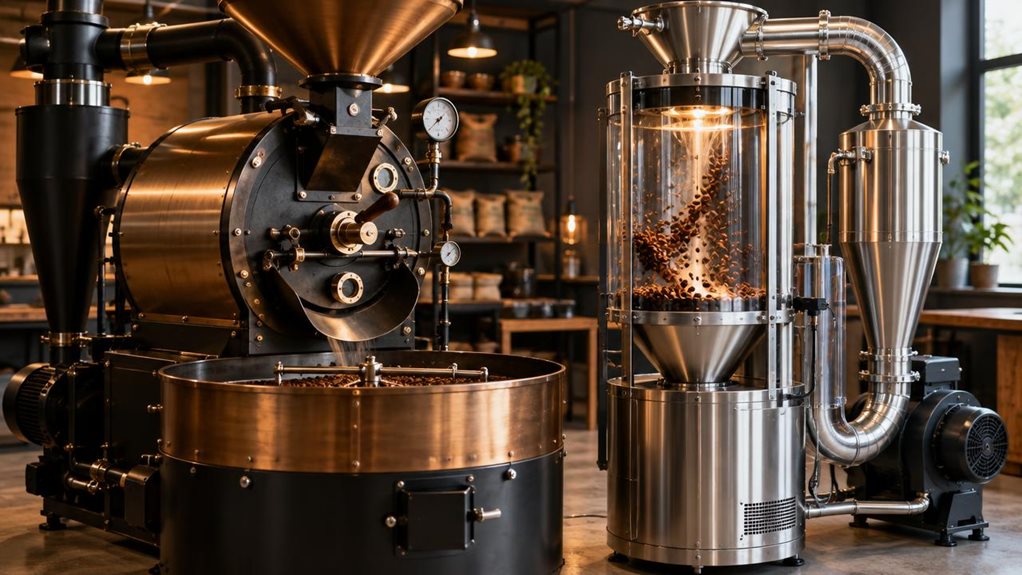
A crisp, high-resolution studio photograph of two coffee roasting machines side by side: a traditional drum roaster with a large rotating cylindrical chamber, bronze metal finish, pipes, gauges, and visible vents, contrasted with a sleek air roaster featuring a transparent vertical chamber, polished stainless steel, and streamlined airflow tubing. Warm industrial lighting, shallow depth of field, sharp reflections, and fine mechanical details. No text, labels, or words anywhe

Trommel- vs. Heißluft-Röster: 3 wichtige Unterschiede

Drei Unterschiede stechen hervor: Hitze, Zeit und Geschmack.

Weiterlesen