Kaffee rösten lernen

Vom ersten Knacken bis zum Abkühlen: So gelingt die erste Röstung.

Eine Röstung folgt einem festen Ablauf: Die Bohnen trocknen, färben sich gelb, werden braun, und irgendwann knacken sie hörbar. Wer diese Phasen kennt, kann gezielt eingreifen.

In diesem Bereich findest du Anleitungen für die erste Röstung, Hilfe bei typischen Fehlern und Antworten auf Alltagsfragen.

Die wichtigsten Fragen zum Einstieg

  • Was brauche ich für die erste Röstung?Rohkaffee, einen Röster, eine Waage, ein Kühlsieb und einen gut belüfteten Platz.
  • Woran erkenne ich den Röstgrad?An der Farbe der Bohnen, am Geruch und an den Knackphasen.
  • Wie lange sollte der Kaffee ruhen?Frisch gerösteter Kaffee gast noch aus. Viele lassen ihn einige Tage ruhen, bevor sie ihn trinken.
  • Wohin mit dem Rauch?Röste am offenen Fenster, unter einem Abzug oder im Freien und lüfte danach gründlich.

Ratgeber

Rösten lernen: alle Artikel (12)

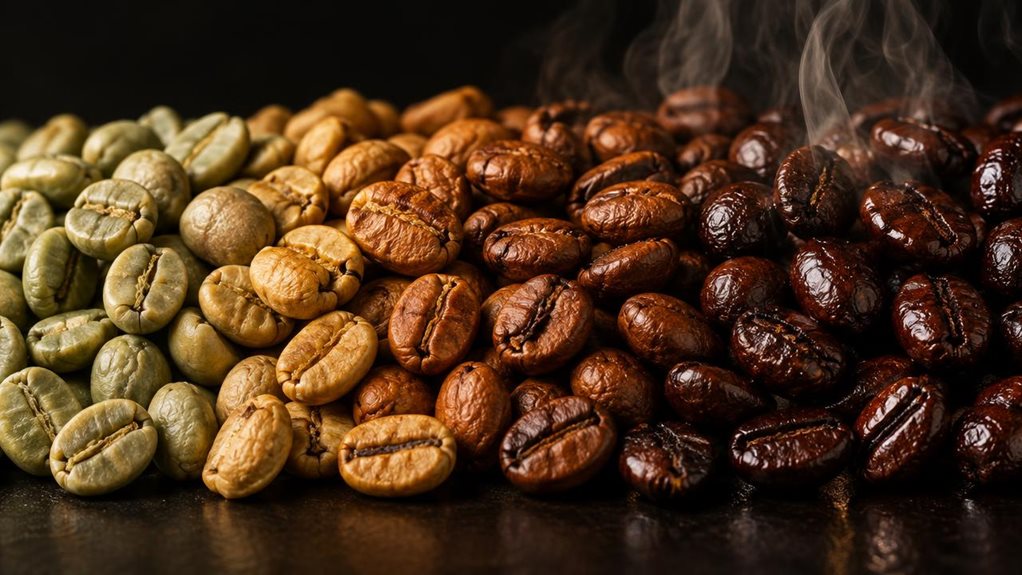
Close-up high-end photograph of coffee beans at different roasting stages arranged in a smooth gradient from pale green to golden brown to deep glossy mahogany. Rich textures show dry surfaces transforming into oily, cracked skins with rising wisps of steam. Warm side lighting highlights color shifts, shadows, and sheen on the beans against a dark, minimalist background. No text, no labels, no words.

Was beim Rösten mit dem Geschmack passiert

Rösten löst intensive chemische Veränderungen im Inneren der Bohnen aus. Die Feuchtigkeit sinkt von 12% auf 2%.

Weiterlesen
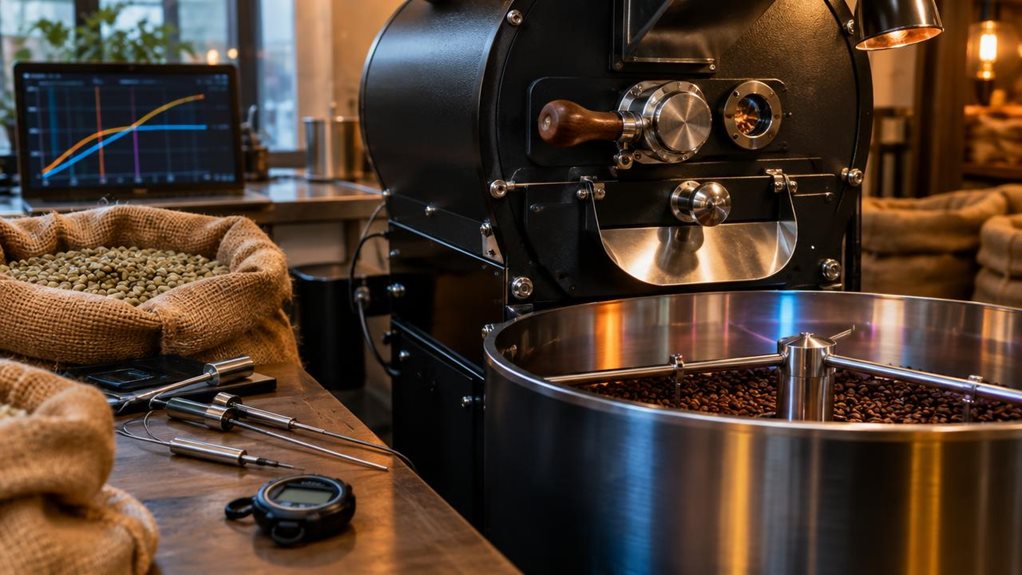
A high-end camera photograph of a coffee roasting workstation, with a matte black roaster in sharp focus and a glowing digital temperature curve display implied through colorful reflections on brushed metal surfaces. Burlap sacks of green beans, polished probes, and a timing stopwatch sit nearby. Warm amber light contrasts with cool steel tones, creating a precise, technical mood. No text, labels, numbers, or words visible.

Röstprofile verstehen: Temperatur, Zeit und Kurve

Ein Röstprofil zeigt dir die Temperatur deiner Bohne über die Zeit, vom Einwurf bis zum Auswurf.

Weiterlesen
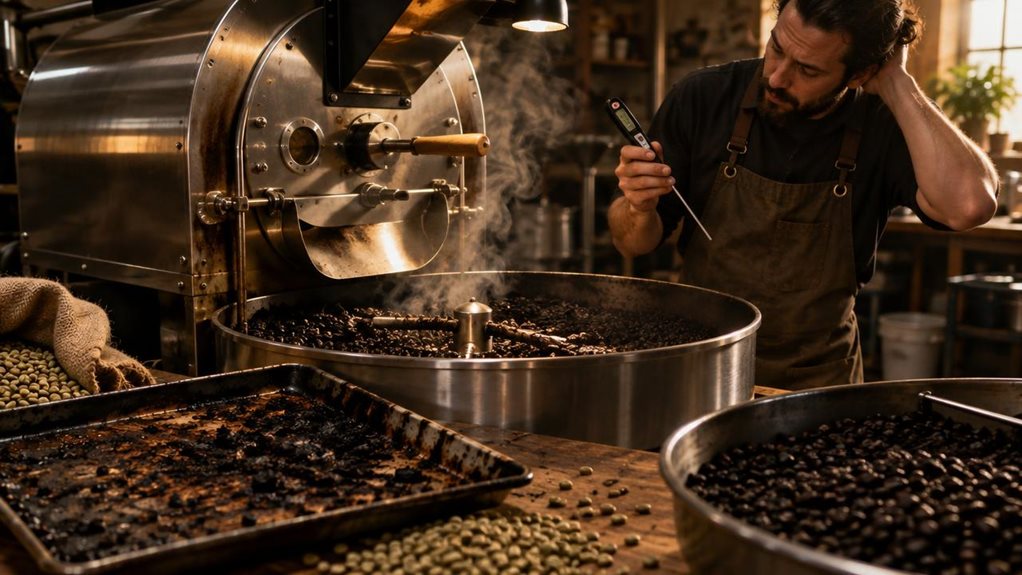
A high-end editorial photograph of a coffee roasting workspace, showing a stainless steel roaster, scattered green coffee beans, a charred batch tray, over-roasted dark beans in a cooling tray, and a distracted roaster checking a thermometer incorrectly. Warm steam, rich brown tones, and dramatic side lighting emphasize common roasting mistakes. Sharp focus, shallow depth of field, realistic textures, no text, no labels, no words.

Die häufigsten Fehler beim Kaffeerösten

Die meisten Röstfehler lassen sich auf sechs Ursachen zurückführen: ungleichmäßige Hitzeverteilung, falsche Röstgeschwindigkeit, fehlende Verkostungsnotizen, minderwertige grüne Bohnen, zu frühes Aufbrühen und überladene Chargen.

Weiterlesen
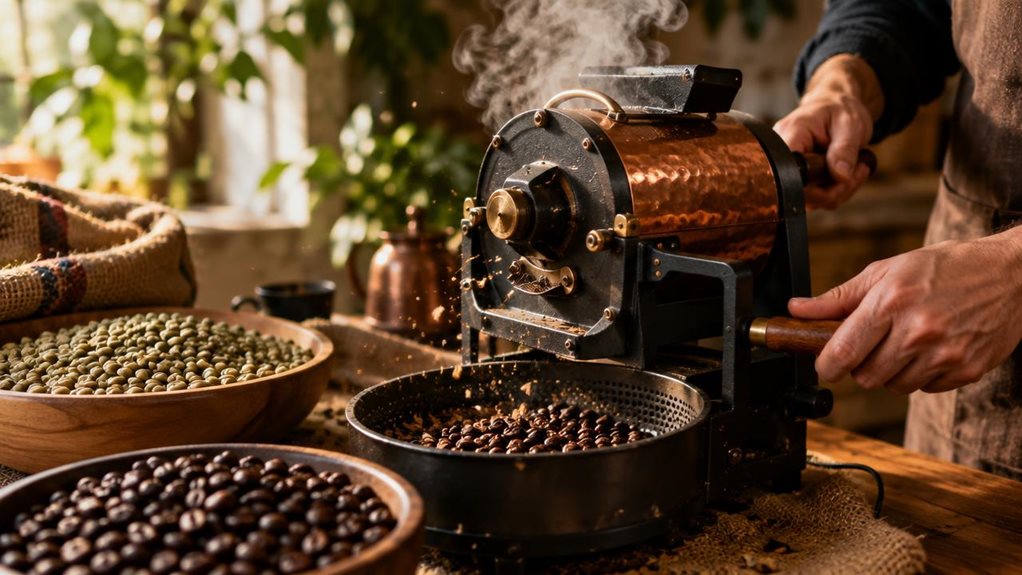
A high-end documentary-style photograph of a person roasting coffee at home, captured in warm natural light. Close-up view of a small drum roaster steaming beside bowls of green coffee beans and freshly roasted dark beans. Hands carefully turning the roaster handle, with chaff drifting in the air. Rich copper, black, and burlap tones, shallow depth of field, crisp detail, cinematic composition, no text or labels.

Kaffee selbst rösten: So fängst du an

Willst du deinen eigenen Kaffee rösten? Schnapp dir eine Popcornmaschine (10-20 €) oder einen Heißluftröster und ein paar grüne Bohnen, und schon kann's losgehen.

Weiterlesen
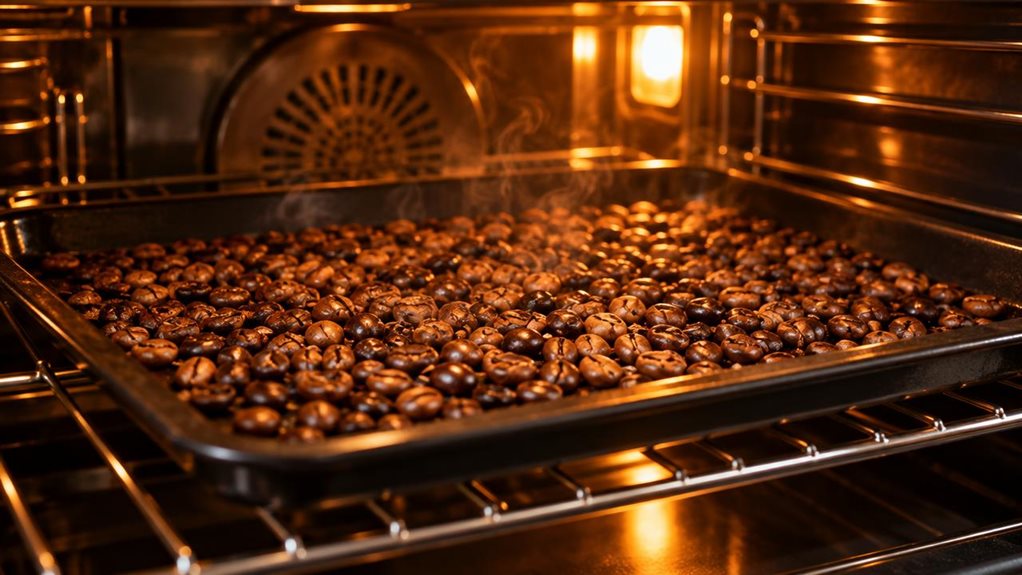
A high-end, close-up kitchen photograph of coffee beans spread in a thin layer on a dark baking tray inside a warm oven, glowing amber from the heating elements. The beans are mid-roast, some lightly cracking and turning glossy brown, with subtle wisps of heat rising. Stainless steel racks and the oven’s soft interior light create a realistic, cinematic feel. No text, no labels, no people.

Kaffee im Backofen rösten: Funktioniert das wirklich?

Ja, du kannst Kaffee im Backofen rösten.

Weiterlesen
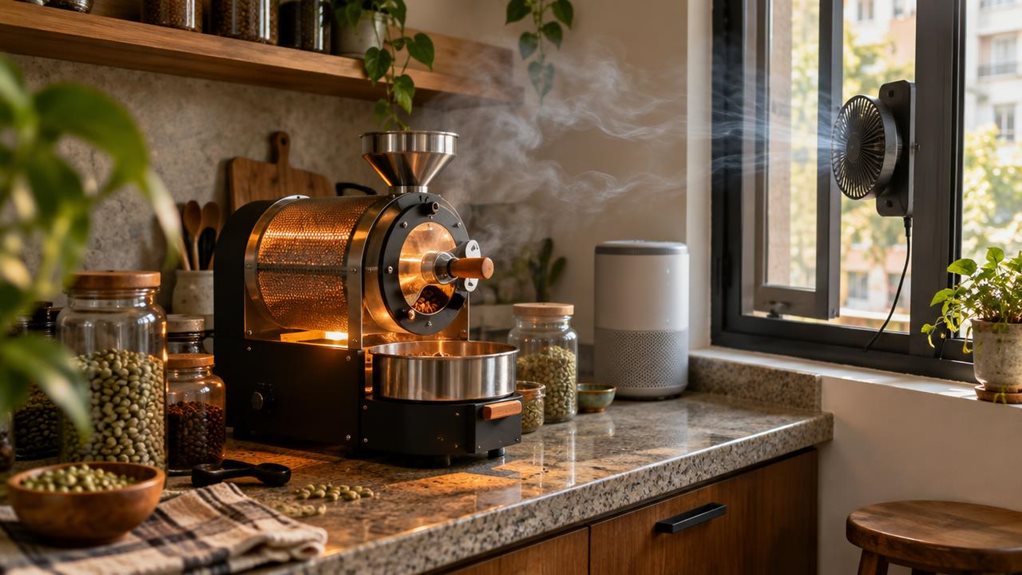
A high-resolution photograph of a cozy apartment kitchen during coffee roasting, with a small tabletop roaster glowing amber on a stone countertop. Soft steam and faint wisps of smoke drift toward an open window with a slim fan pulling air outside. Glass jars, green coffee beans, and a quiet air purifier sit nearby. Warm natural light, shallow depth of field, crisp details, realistic textures, no text or words visible.

Kaffee in der Wohnung rösten: Rauch und Geruch unter Kontrolle halten

Rauch lässt sich nicht vermeiden, sobald die Bohnen etwa 166°C erreichen, aber du kannst ihn kontrollieren.

Weiterlesen
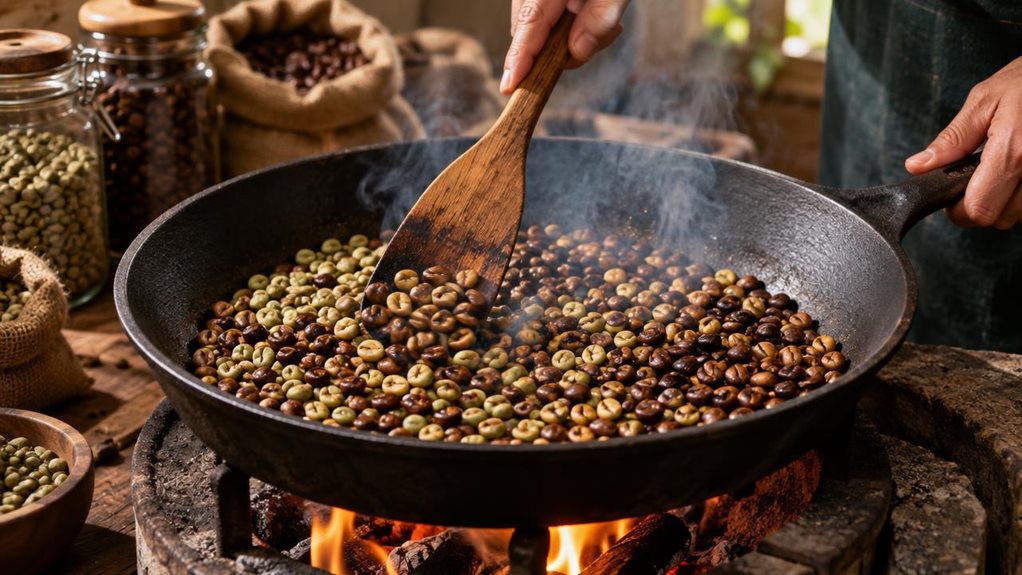
A high-resolution photograph of hands roasting coffee beans in a wide cast-iron pan over a small open flame, captured step by step with rich detail. Dark green beans scatter in the pan as some turn golden brown and others deepen to glossy chestnut. Wisps of aromatic smoke rise into warm light. A wooden spatula stirs the beans, with rustic jars and burlap sacks softly blurred in the background. No text or words.

Kaffee in der Pfanne rösten: Schritt für Schritt

Erhitze eine schwere Pfanne, gib 100–150g grüne Kaffeebohnen hinein und rühre ständig um, ohne sie jemals länger als 2-3 Sekunden stillstehen zu lassen.

Weiterlesen
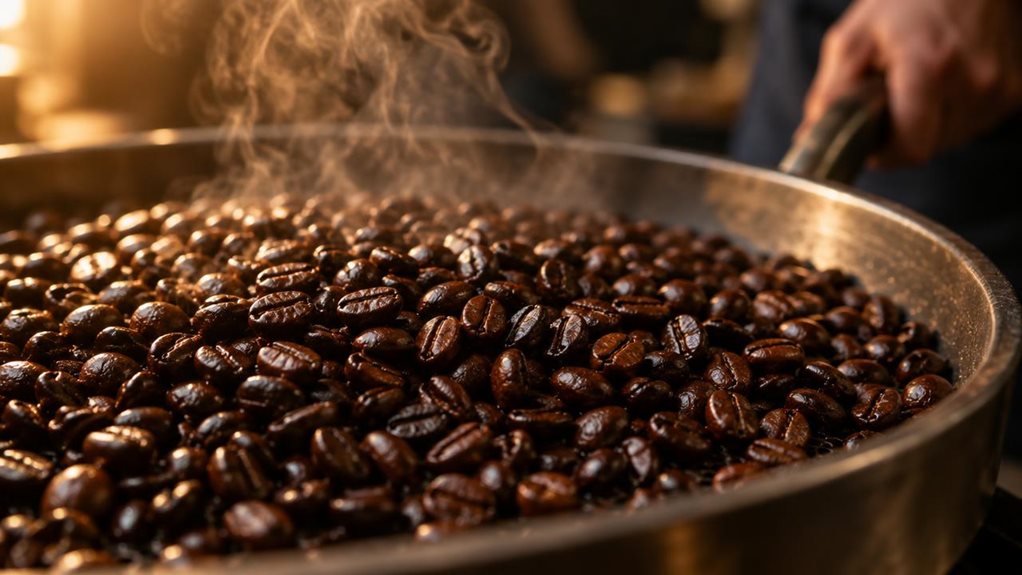
A high-end studio photograph of freshly roasted coffee beans resting in a shallow metal cooling tray, wisps of steam curling upward in soft amber light. The beans glisten with natural oils, ranging from deep mahogany to dark chocolate brown. A blurred hand tools the tray’s edge in the background. Crisp texture, shallow depth of field, rich contrast, no text, no labels, no words.

Kaffee nach dem Rösten ruhen lassen: Wie lange?

Wie lange solltest du deinen Kaffee ruhen lassen? Gib Filterkaffee 3-7 Tage.

Weiterlesen
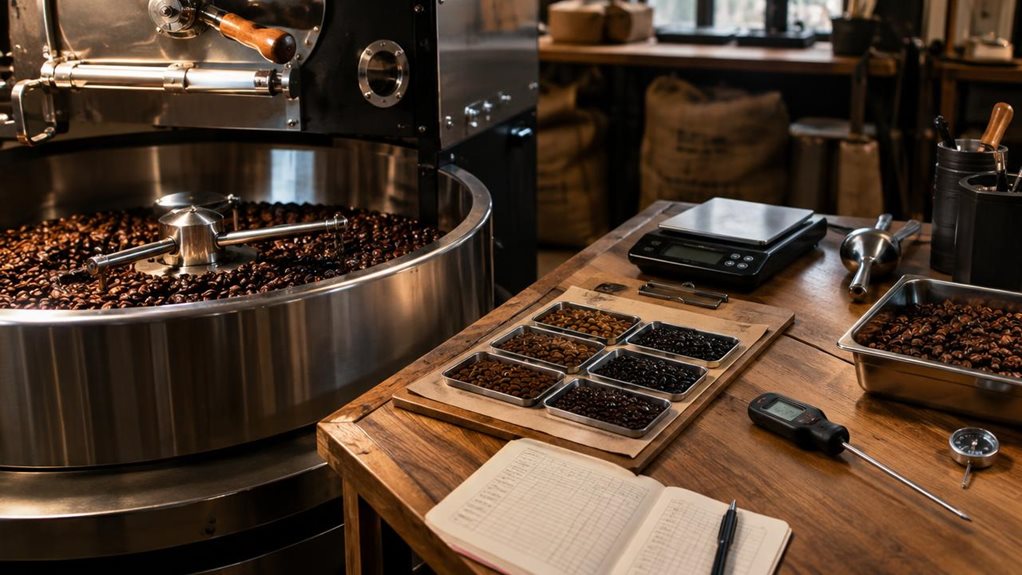
A high-end camera photograph of a coffee roaster’s workspace, featuring a stainless-steel roasting machine beside a wooden clipboard with neatly arranged sample trays, a digital scale, and a thermometer. Warm ambient light highlights glossy coffee beans in a shallow metal tray, with visible tools for tracking roast timing, temperature, and weight loss. Crisp focus, rich texture, natural shadows, realistic color, no text, no words.

Führe ein Röstprotokoll: Zeit, Temperatur, Röstverlust

Ein Röstprotokoll zu führen ist einfach und effektiv.

Weiterlesen
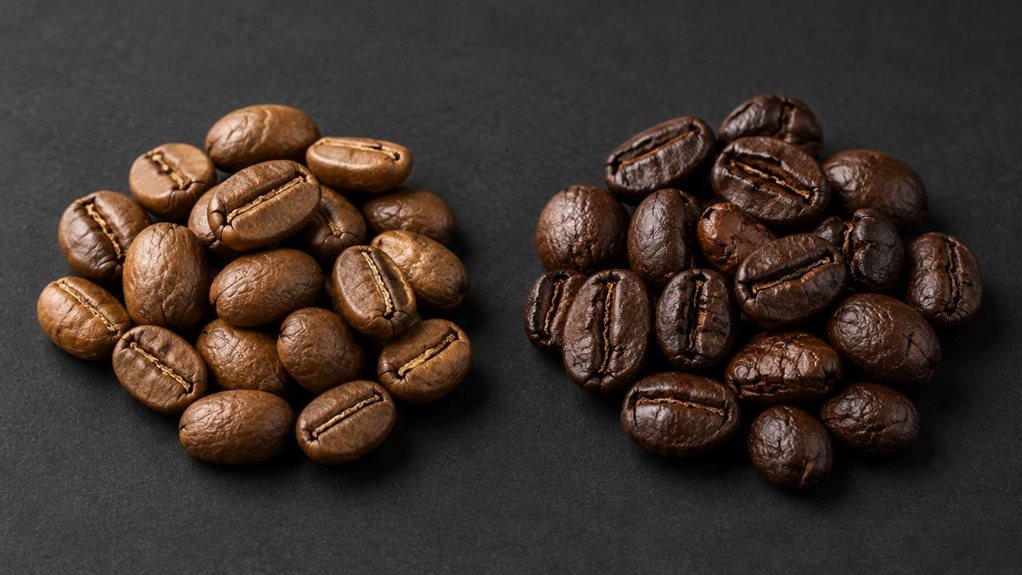
A high-end studio photograph of two small groups of coffee beans side by side on a matte charcoal surface, showing roasting progression. The left beans are light brown with smooth, intact skins and subtle surface oil. The right beans are darker, deeper mahogany with visible first and second crack fissures, slightly puffed shapes, and a more rugged texture. Soft directional lighting emphasizes crisp detail, realistic shadows, and rich tonal contrast.

Erster und zweiter Crack: Wie du den Röstfortschritt erkennst

Der Röstfortschritt zeigt sich an zwei Momenten: erstes Knacken und zweites Knacken.

Weiterlesen
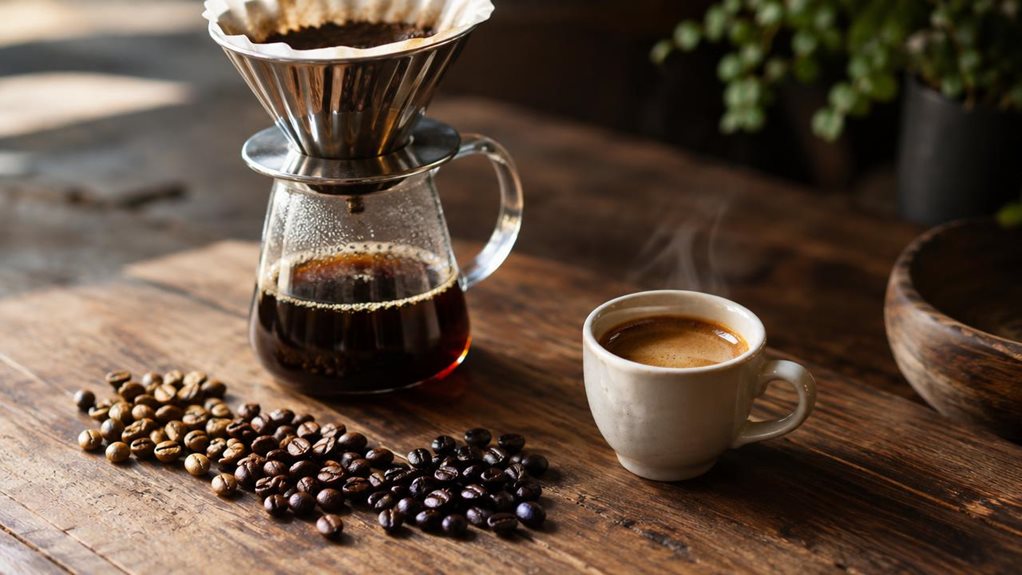
A high-end DSLR photograph of a minimalist coffee tasting setup: a sleek pour-over filter cone, a rich espresso shot in a demitasse, and a small spread of roasted coffee beans in varying shades from light to dark, arranged on a textured wooden table. Soft natural side lighting highlights steam, crema, and glossy bean surfaces. Shallow depth of field, crisp details, warm tones, editorial composition, no text, no labels.

Filter, Espresso und Omni Röstung: Was steckt dahinter?

„Filter“, „Espresso“ und „Omni“ sind keine Bohnensorten, das sind Röststile.

Weiterlesen
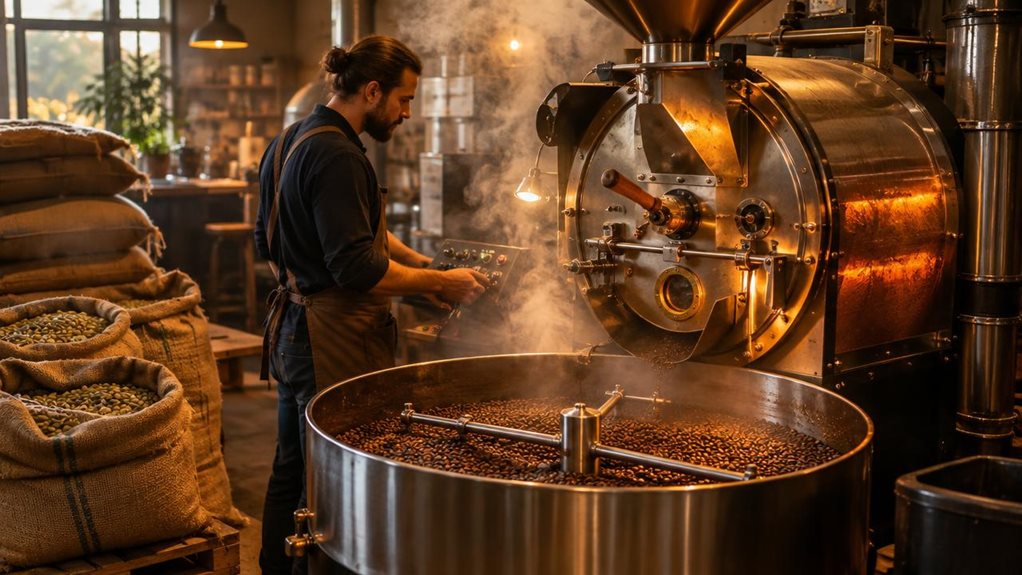
A high-end documentary-style photograph of a coffee roasting workshop, showing a stainless-steel drum roaster glowing with amber heat, burlap sacks of green coffee beans stacked nearby, and a roaster in aprons adjusting controls through a haze of steam and chaff. Warm light reflects off metal surfaces, with rich browns, copper tones, and subtle smoke in the air. No text, no signage, no words visible.

Kaffeerösten: Was kostet es und lohnt es sich?

Ein Popcorn-Popper kostet 10-20€, oder du zahlst 70€+ für einen Einsteiger-Röster.

Weiterlesen