Ratgeber

Anleitungen, Kaufberatung und Hintergründe zum Kaffeerösten. 162 Artikel.

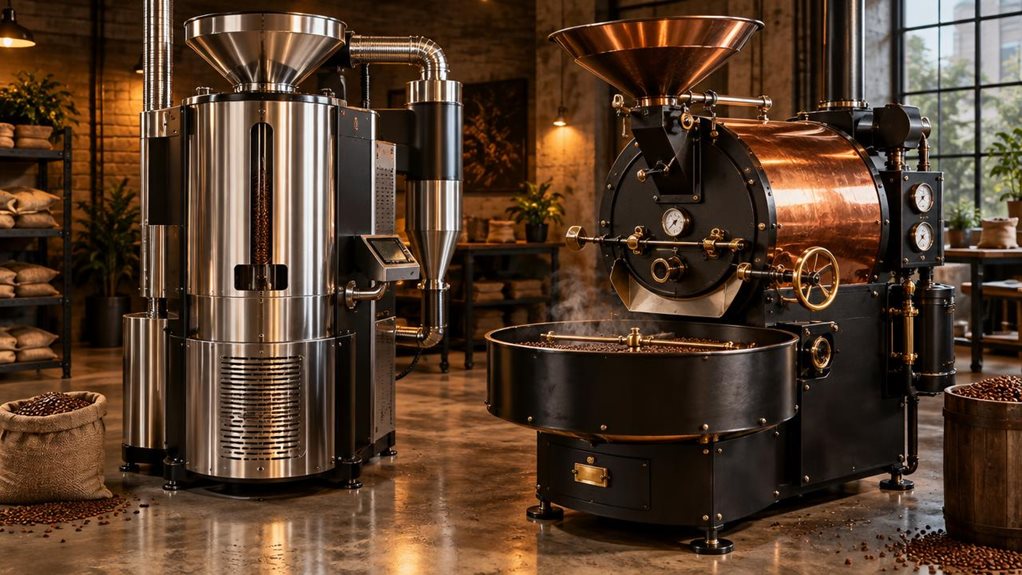
A crisp, high-end photograph of two coffee roasting machines side by side in a modern industrial studio: a tall hot air roaster with sleek vents and polished metal panels, and a classic drum roaster with a rounded copper drum, gauges, and heavy steel frame. Warm amber lighting glints off brushed surfaces, with soft steam, scattered coffee beans, and a clean concrete floor. No text, no labels, no people.

Heißluftröster oder Trommelröster: Welcher passt zu dir?

Willst du eine helle, klare Tasse, die den Ursprungscharakter betont? Dann wähl einen Heißluftröster. Er ist schnell, schonend zu den Bohnen und ideal für kleine Mengen (100g–1,2kg).

Weiterlesen
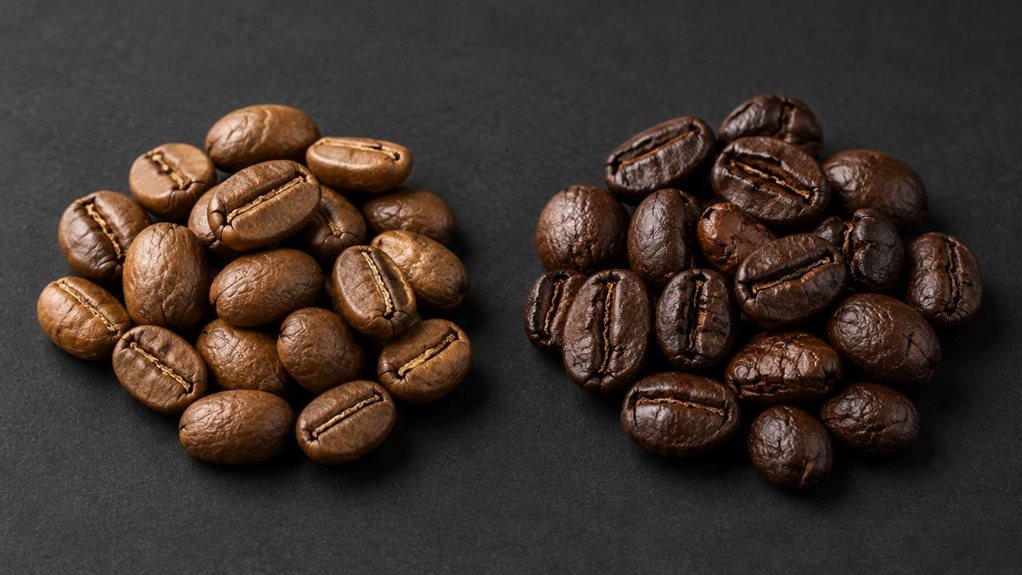
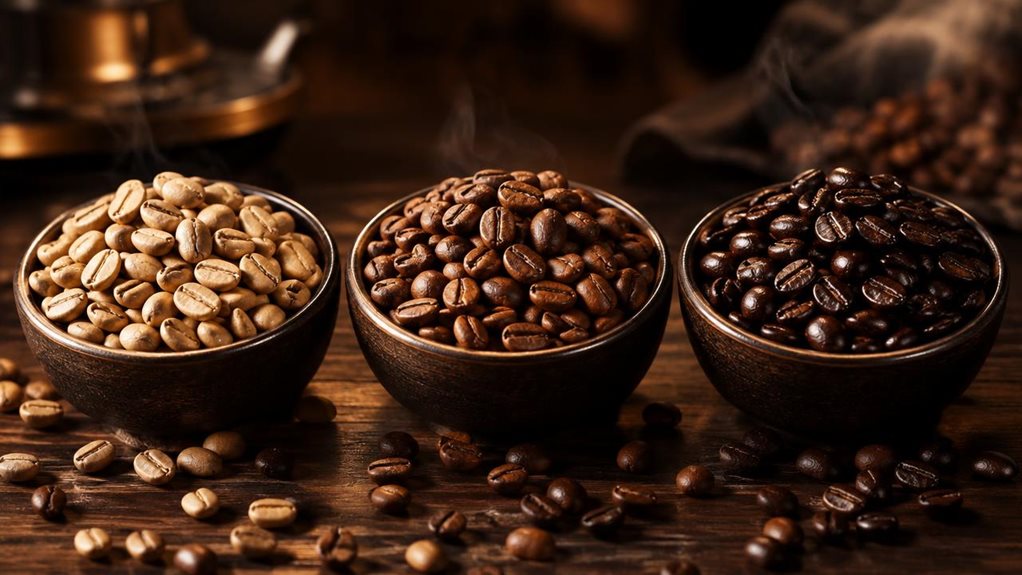
A high-end studio photograph of two small groups of coffee beans side by side on a matte charcoal surface, showing roasting progression. The left beans are light brown with smooth, intact skins and subtle surface oil. The right beans are darker, deeper mahogany with visible first and second crack fissures, slightly puffed shapes, and a more rugged texture. Soft directional lighting emphasizes crisp detail, realistic shadows, and rich tonal contrast.

Erster und zweiter Crack: Wie du den Röstfortschritt erkennst

Der Röstfortschritt zeigt sich an zwei Momenten: erstes Knacken und zweites Knacken.

Weiterlesen
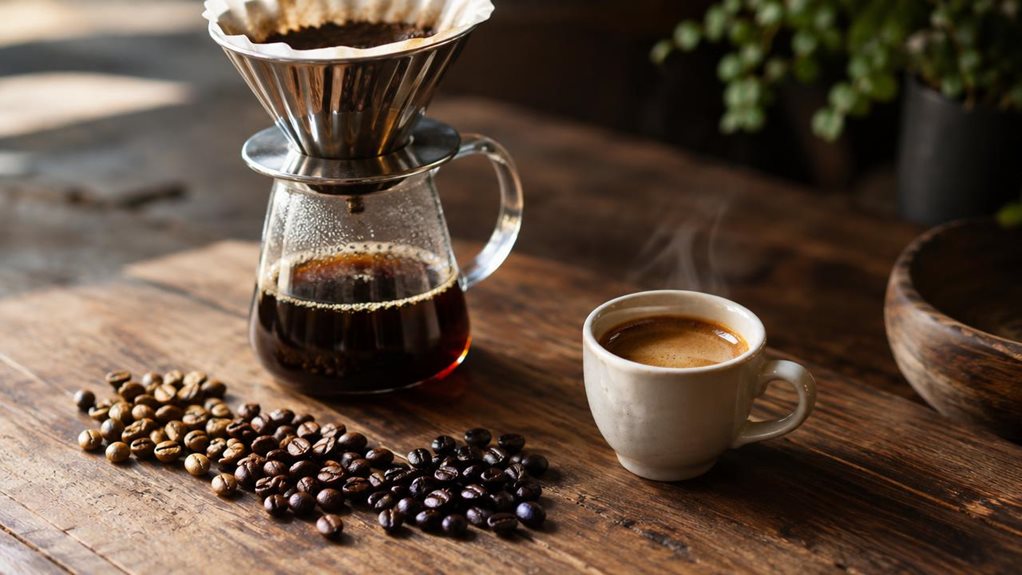
A high-end DSLR photograph of a minimalist coffee tasting setup: a sleek pour-over filter cone, a rich espresso shot in a demitasse, and a small spread of roasted coffee beans in varying shades from light to dark, arranged on a textured wooden table. Soft natural side lighting highlights steam, crema, and glossy bean surfaces. Shallow depth of field, crisp details, warm tones, editorial composition, no text, no labels.

Filter, Espresso und Omni Röstung: Was steckt dahinter?

„Filter“, „Espresso“ und „Omni“ sind keine Bohnensorten, das sind Röststile.

Weiterlesen
A high-end, close-up photograph of a dark roast coffee setup: glossy black-brown beans spilling from a matte ceramic bowl beside a steaming cup, rich crema catching soft side light. Wisps of vapor rise against a moody, blurred background of warm wood and deep shadows. Tiny oil highlights gleam on the beans, emphasizing depth, intensity, and aroma. No text, no labels, only tactile, cinematic detail.

Dunkler Röstkaffee: Stark, Bitter oder Einfach Aromatisch?

Dark Roast ist ehrlich gesagt alle drei.

Weiterlesen
A high-end DSLR photograph of three elegant coffee roasters side by side, each displaying distinct roast stages: pale golden light roast, rich chestnut medium roast, and deep glossy dark roast. Warm studio lighting highlights the beans’ textures and sheen, with subtle steam and soft shadows on a dark wooden surface. Crisp, shallow depth of field, luxurious commercial product style, no text, no labels, no words.

Bestimme den Röstgrad selbst: Helle, Mittlere, Dunkle Röstung

Du kontrollierst den Röstgrad mit deinen Ohren, nicht mit Glück. Der erste Crack, ein scharfes Knallgeräusch, tritt bei 196-205°C auf, das ist dein Signal für helle Röstung.

Weiterlesen
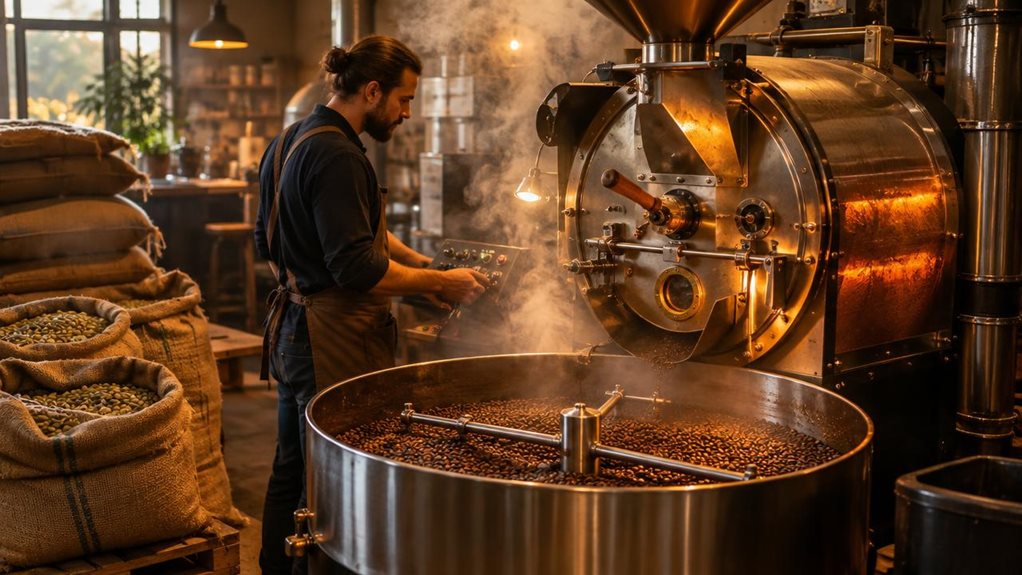
A high-end documentary-style photograph of a coffee roasting workshop, showing a stainless-steel drum roaster glowing with amber heat, burlap sacks of green coffee beans stacked nearby, and a roaster in aprons adjusting controls through a haze of steam and chaff. Warm light reflects off metal surfaces, with rich browns, copper tones, and subtle smoke in the air. No text, no signage, no words visible.

Kaffeerösten: Was kostet es und lohnt es sich?

Ein Popcorn-Popper kostet 10-20€, oder du zahlst 70€+ für einen Einsteiger-Röster.

Weiterlesen
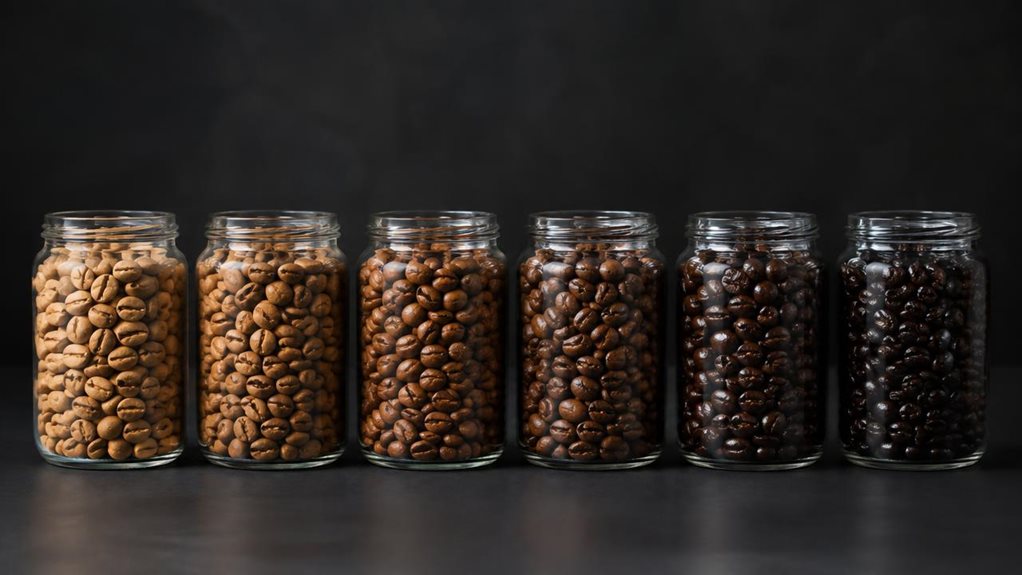
A high-end camera photograph of six glass jars arranged in a clean gradient from pale cinnamon to deep ebony coffee beans, illustrating roast levels from light to dark. Soft studio lighting highlights glossy textures, subtle oil sheen on darker beans, and the rich variation in color and surface. Minimalist dark backdrop, shallow depth of field, crisp detail, no labels, no text, elegant editorial composition.

Kaffeeröststufen: Der Überblick von Hell bis Dunkel

Kaffeeröststufen reichen von hell bis dunkel. Zwei Punkte bestimmen, wo deine Bohnen landen: das erste und das zweite Knacken, bei denen die erhitzten Bohnen hörbar knacken, während Gase entweichen.

Weiterlesen
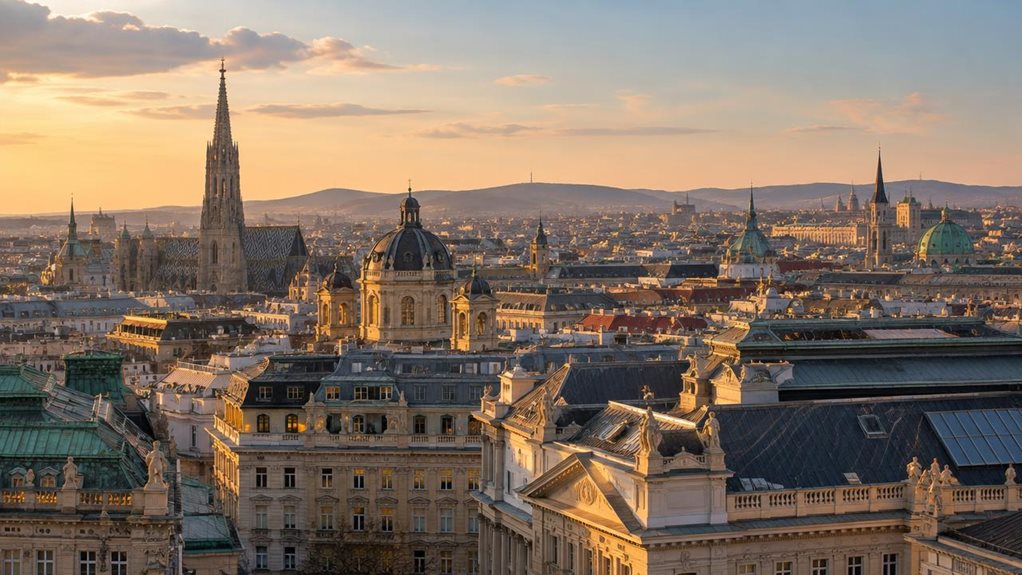
A high-end camera photograph of a dense, elegant cityscape in Vienna at golden hour, showing ornate historic rooftops, spires, domes, and grand stone facades stretching across the frame. The scene feels full and layered, with warm sunlight reflecting off windows and pale rooftops under a soft blue sky. Crisp architectural detail, natural color, and subtle atmospheric depth. No text, no signage, no words in the image.

Stadt, Voll City, Wien, Französisch: Die Röststufen Erklärt

Diese Röstnamen sind keine feste Skala. Sie sind anschauliche Kurzbezeichnungen, die in der Geschichte verwurzelt sind.

Weiterlesen
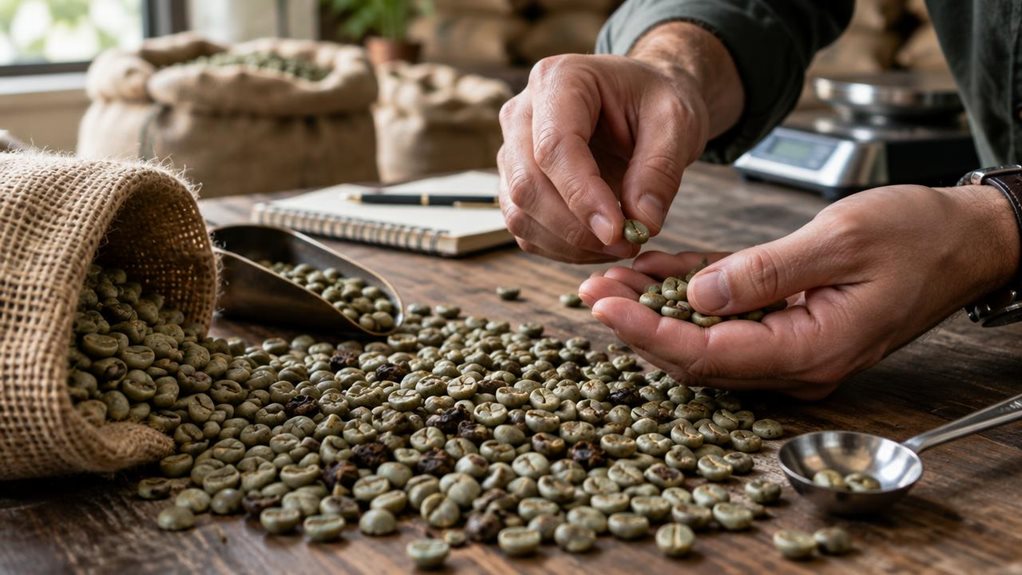
A high-end, close-up photograph of hands inspecting raw green coffee beans spilled across a rustic wooden table, with burlap sacks, a small scoop, and a cupping spoon nearby. Soft natural window light highlights the matte olive-green beans, subtle defects, and varied sizes. In the background, blurred coffee sacks, a notebook, and a metal scale suggest quality checking and purchasing decisions. No text, no words.

Grüner Kaffee kaufen: Worauf du achten solltest

Wenn du Rohkaffee kaufst, schau nicht nur auf das Herkunftsland. Prüf zuerst das Erntejahr: frische Bohnen kommen innerhalb von drei bis sechs Monaten an, und alles, was älter als ein Jahr ist, verliert schnell an Aroma.

Weiterlesen
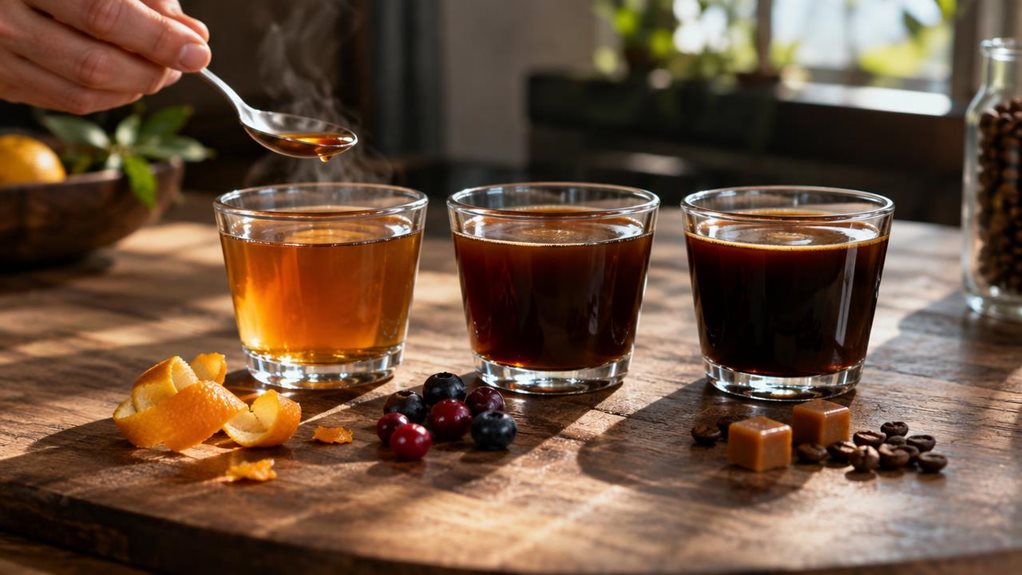
A high-end DSLR photograph of a tasting setup showing three glass cups of coffee in a row, each a different roast level from light amber to deep mahogany. A hand holds a spoon above the brightest cup, with small citrus peel, berries, and caramel notes arranged beside it. Soft natural window light highlights steam, glossy surfaces, and rich texture on a wooden table. No text, no labels.

Säure im Kaffee: Wie der Röstgrad den Geschmack beeinflusst

Der Röstgrad verändert die Säure von Kaffee erheblich. Helle Röstungen behalten mehr Chlorogensäure, eine organische Verbindung, die einen frischen, lebendigen Geschmack erzeugt.

Weiterlesen
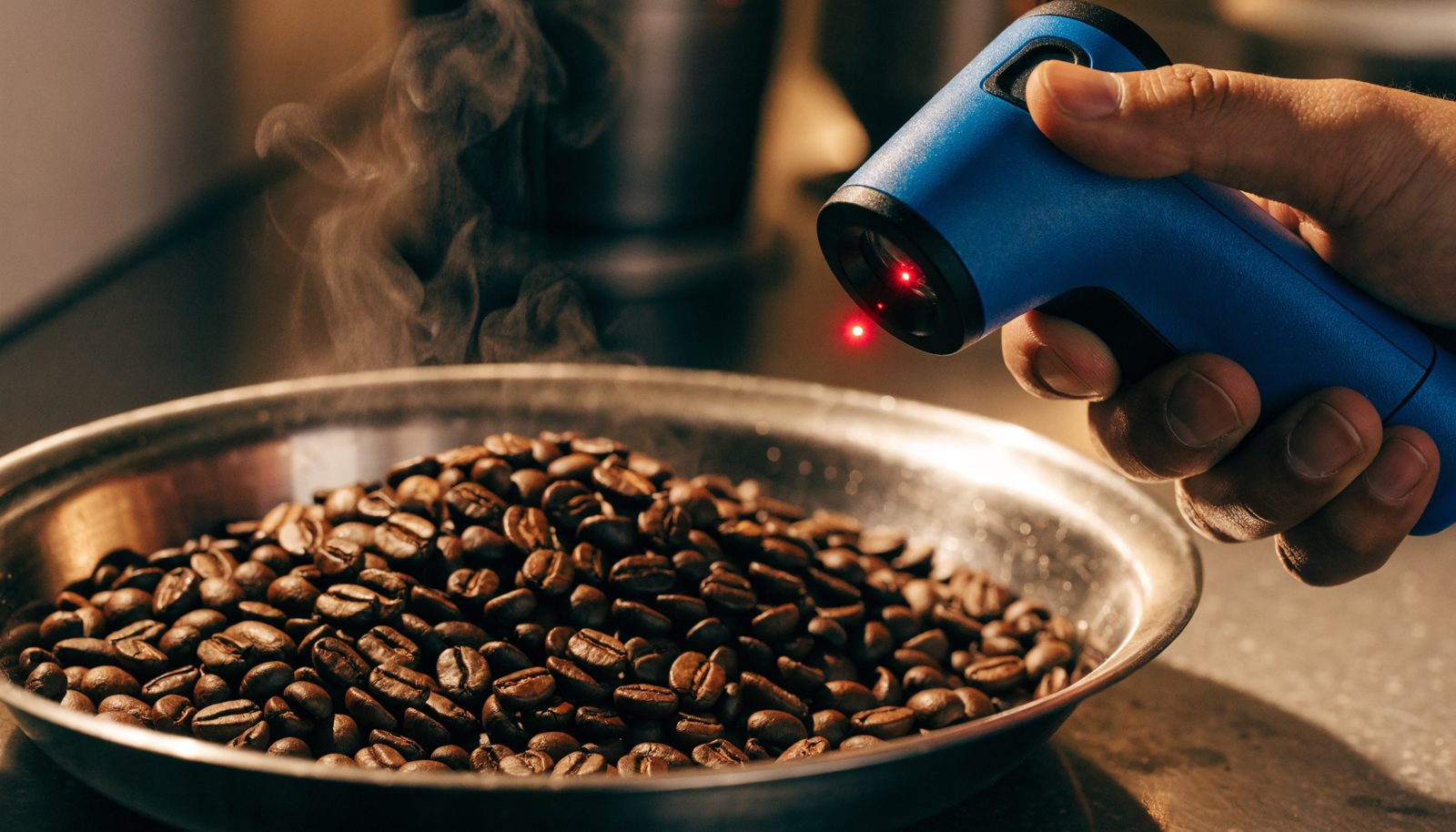
Handliches blaues Infrarot-Thermometer mit Laserpunkt zeigt auf eine Metallschale mit frisch gerösteten Kaffeebohnen auf einer Küchenarbeitsplatte, warmes Licht, dezenter Dampf, ohne Text im Bild

Eventek IR-Thermometer: berührungslos bis 550 °C

Das Eventek ET-313 ist ein Infrarot-Thermometer mit Laserpunkt, das Oberflächentemperaturen berührungslos misst. Laut Angebot reicht der Bereich von -50 bis 550 °C. Beim Rösten nutzt du so ein Gerät nicht als Bohnenfühler, sondern für Kontrollmessungen von außen. Wir haben es nicht selbst...

Weiterlesen
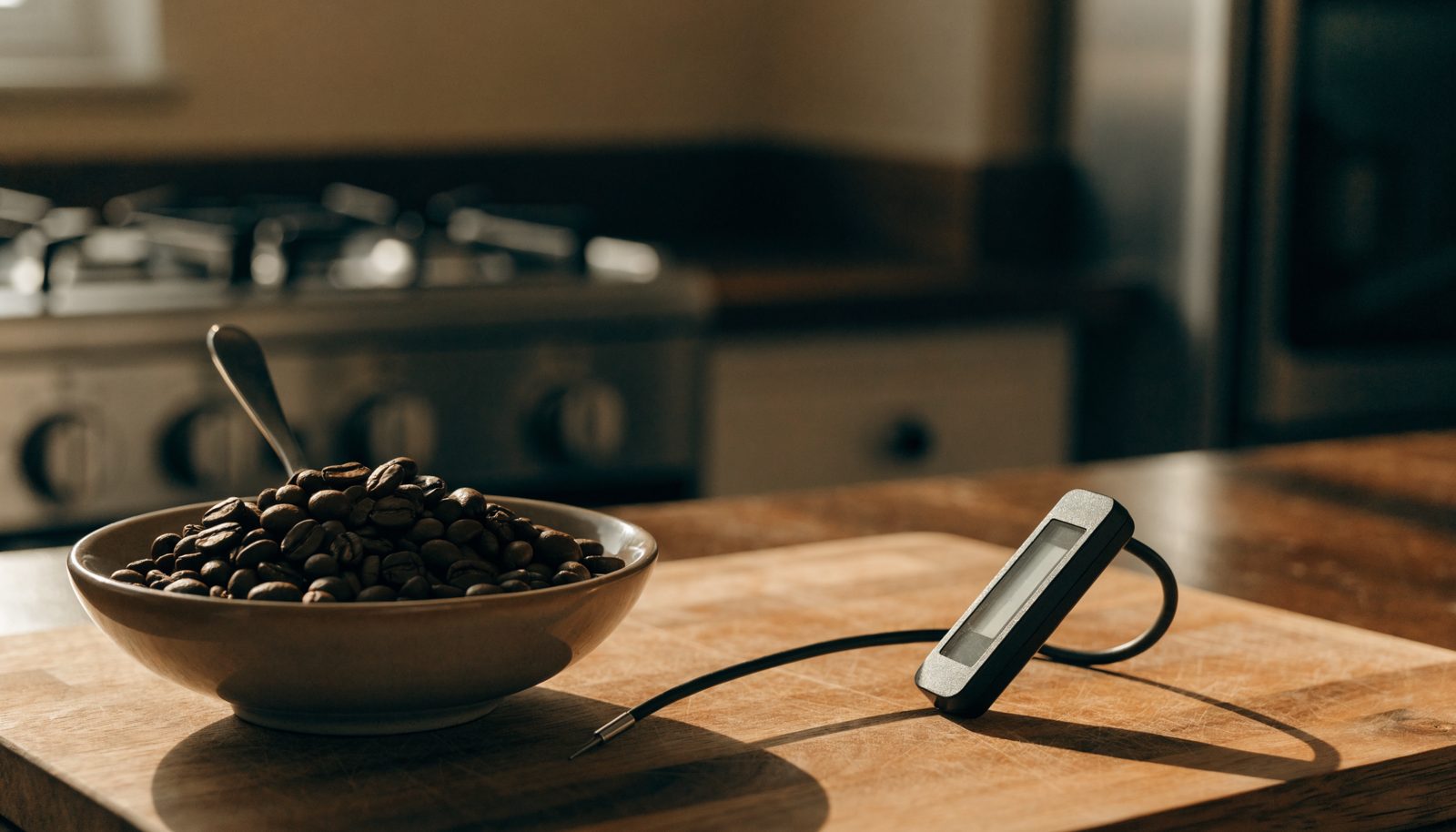
Kleines handliches digitales Thermometer mit Kabelfühler auf einem Holzbrett neben einer Schale mit geröstetem Kaffee und einem Löffel, gemütliche Küche, warmes seitliches Licht, ohne Text

EECOO Typ-K-Thermometer mit Datenspeicher

Das EECOO ist ein batteriebetriebenes Handthermometer mit Typ-K-Sonde, LCD und Datenspeicher. Es ist laut Angebot für Haushalt, Gewerbe und Industrie gedacht, nicht für Kaffee im Besonderen. Für Hobbyröster kann es als Kontrollgerät interessant sein. Wir haben es nicht selbst getestet, die...

Weiterlesen